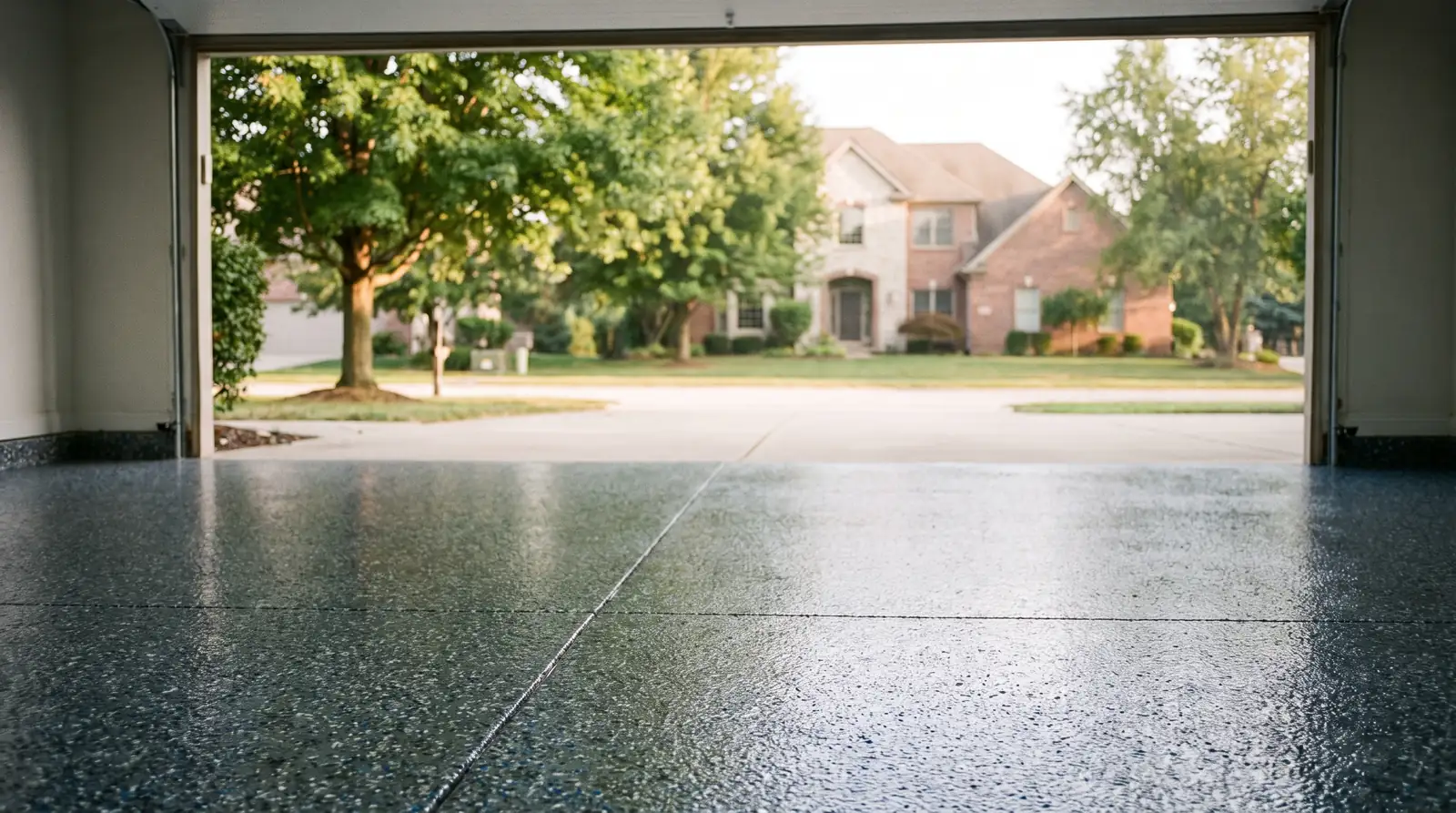
Transform a cracked, stained garage or basement floor into a showroom-quality surface that handles Indiana’s winters without peeling or flaking.
Call for a Free Estimate Get a Quote OnlineEpoxy flooring is a multi-layer coating system applied directly to concrete. It starts with surface grinding to open the pores of the slab, then a primer, followed by one or more colored base coats, decorative vinyl flakes or quartz broadcast (if you want them), and a clear polyurethane or polyaspartic topcoat. The finished surface bonds chemically to the concrete rather than just sitting on top of it.
For Carmel homeowners, the appeal is practical: Hamilton County gets 25+ freeze-thaw cycles each winter. Bare concrete absorbs water, which expands and contracts with each freeze, causing the surface to pit, scale, and crack over time. An epoxy coating seals the slab completely, stopping that cycle. It also resists motor oil, road salt brought in on tires, and the cleaning chemicals most people use in a garage.
The most popular system in Carmel right now is the full-flake epoxy—a solid base coat with colored vinyl chips broadcast edge to edge, then a clear topcoat. It hides existing imperfections, provides grip underfoot, and looks sharp in the two- and three-car garages common in subdivisions like Bridgewater, West Clay, and Villages of West Clay.
Surface pitting on Indiana slabs is usually from road salt dragged in on winter tires combined with freeze-thaw damage. Once spalling starts, it accelerates. Epoxy stops it in its tracks and levels out mild surface damage as part of the prep process.
Carmel’s housing market is competitive. A finished garage floor photographs well, shows well, and is one of the first things buyers notice when they pull in. An epoxy floor typically costs less than $4,000 and adds visual weight well beyond that price.
Turning a garage into a home gym, workshop, or storage room means you want a floor that’s clean, durable, and easy to sweep. Uncoated concrete sheds dust constantly. An epoxy floor ends that problem and makes the space feel like a room instead of a utility area.
New construction concrete in Carmel is typically poured and left bare. Coating it while the slab is relatively fresh (1–2 years old) means fewer pre-existing cracks and a cleaner bond. Waiting until problems develop means more surface prep and higher cost.
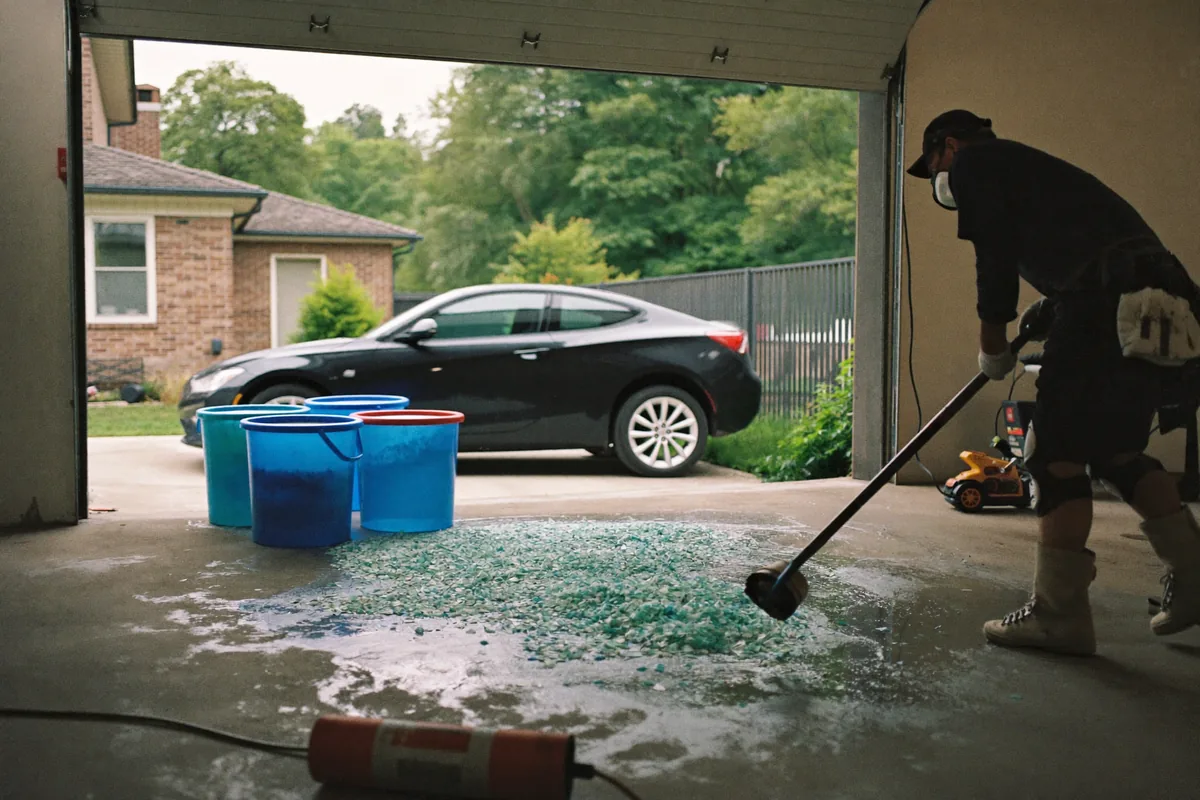
The quality of the finished floor is determined almost entirely by what happens before a drop of epoxy is applied. Here’s what we do on every job:
We use commercial diamond grinders on every job. Acid etching is faster and cheaper—which is why some competitors still use it—but it leaves a surface that doesn’t hold coating reliably past the 2-year mark. Every floor we coat starts with proper mechanical prep.
We test every slab before we start. Indiana’s water table and clay soil make moisture vapor a real issue, especially in Carmel’s newer subdivisions where slabs are poured over compacted fill. Skipping this test is the main reason epoxy peels in the first few years.
We’ve worked in Bridgewater, West Clay, Woodland Springs, and Clay Terrace neighborhoods. We know the clay soil conditions here, the common slab depths in Carmel builds from different eras, and how Hamilton County winters affect coating durability.
Pricing varies by square footage, system type, and condition of the existing concrete. Here are realistic ranges for Carmel-area jobs based on what we actually quote:
| System | Typical Size | Installed Cost |
|---|---|---|
| Solid-color epoxy (1 color) | 400–500 sq ft (2-car garage) | $1,200–$2,000 |
| Full-flake epoxy system | 400–500 sq ft (2-car garage) | $1,800–$3,200 |
| Full-flake epoxy system | 600–750 sq ft (3-car garage) | $2,800–$4,800 |
| Polyaspartic coating | 400–500 sq ft (2-car garage) | $2,200–$4,000 |
| Basement floor epoxy | 600–800 sq ft | $2,000–$4,500 |
These are installed prices, including surface prep. Add-ons that increase cost: significant crack repair, removal of a previous coating, moisture mitigation primer, cove base around the perimeter. We give firm quotes after a site visit—no per-square-foot estimates over the phone without seeing the floor first.
We do free on-site assessments. We’ll look at the slab, test for moisture, check for existing coatings, and give you an honest answer about what will and won’t work.
Call (317) 493-0591A professionally installed epoxy floor typically lasts 5–10 years in a residential garage, and longer in low-traffic spaces. Indiana’s freeze-thaw winters won’t crack the coating the way they crack bare concrete, because epoxy flexes slightly and creates a sealed barrier. We back our work with a 2-year warranty on materials and labor.
Most homeowners pay between $1,500 and $3,500 for a standard 2-car garage (roughly 400–500 sq ft) with a flake epoxy system. A 3-car garage runs $2,500–$5,000. Polyaspartic coatings cost 20–30% more than standard epoxy but cure in hours instead of days. The biggest cost variable is surface prep—floors with cracks, previous coatings, or high moisture require more work.
Standard epoxy needs temperatures above 50°F during application and cure, so winter installs require a heated garage. Polyaspartic coatings are more flexible in cold temperatures and can sometimes be applied down to 30°F. We schedule winter jobs only when conditions are right and use industrial heaters when needed to ensure a proper cure.
The most common reason is inadequate surface preparation. Big-box store kits use acid etching, which leaves the pores of Indiana’s concrete partially open and doesn’t remove laitance (the weak top layer). Professional installation uses diamond grinding or shot-blasting to open the concrete properly. The second leading cause is moisture—if the slab is emitting vapor from below, any coating will eventually peel. We test for moisture vapor emission before every job.
With a standard epoxy system, we ask you to wait 72 hours before light foot traffic and 7 days before parking a vehicle. Polyaspartic coatings cure much faster—you can typically drive on them within 24 hours of completion. We’ll give you exact timing based on the system we install and the temperature during your job.
Free estimates throughout Hamilton County. Most jobs scheduled within 2 weeks.
Call (317) 493-0591 Request a Quote Online