Garage Floor Epoxy Coating in Carmel, IN

Diamond-ground prep, flake or solid-color systems, and a 2-year warranty on every job in Carmel and Hamilton County.

Call for a Free Estimate
garage floor epoxy coating in Carmel

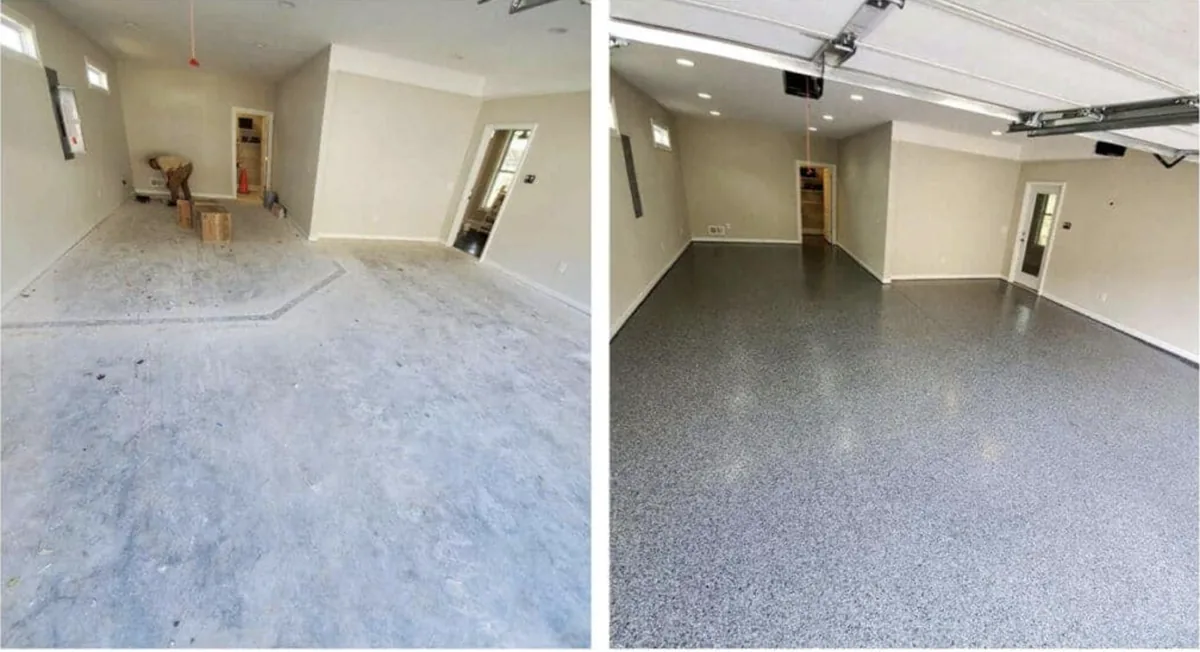
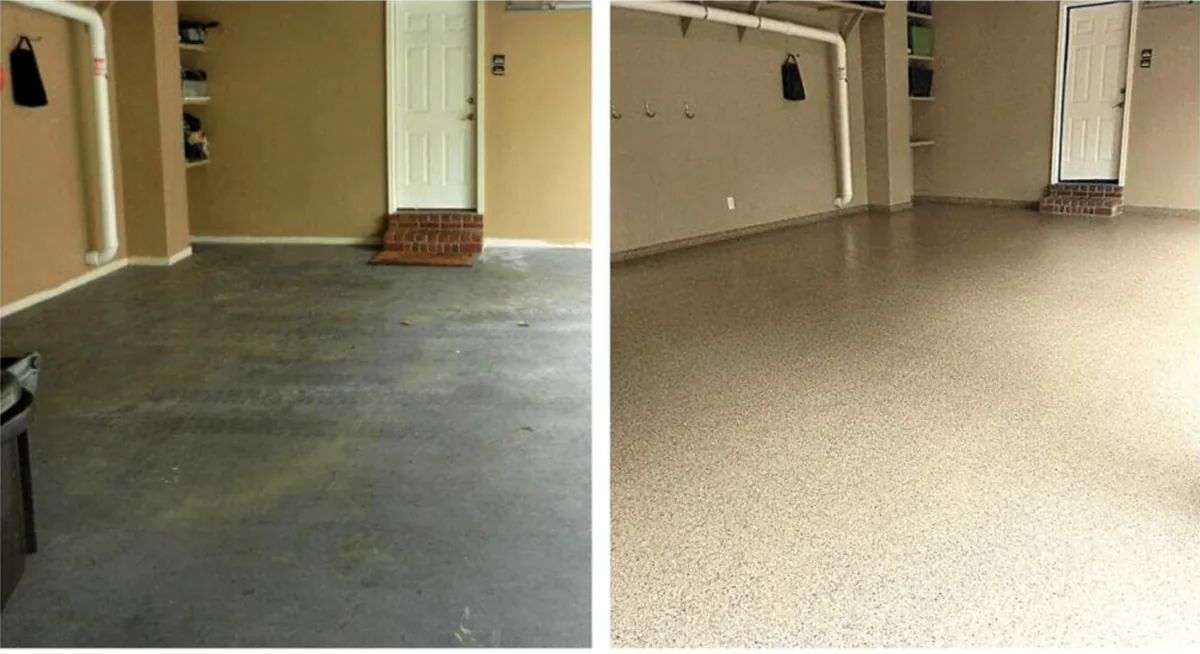
Garage floor epoxy coating in Carmel is one of the most straightforward improvements a homeowner can make—two days of work, a week of cure time, and you end up with a surface that looks sharp, cleans easily, and outlasts the bare concrete underneath it by years. We’ve installed epoxy floors in garages across Hamilton County, from single-car utility spaces to custom 4-car builds with floor drains and wall insulation.

The key difference between a floor that lasts a decade and one that peels in two years is surface preparation. We use commercial diamond grinders on every job—not acid etching kits—and test every slab for moisture vapor emission before we mix any material. If you’ve had an epoxy floor peel on you before, inadequate prep is almost certainly why.

What Does Garage Floor Epoxy Involve?

Our installation follows the same sequence on every job. Here’s what happens from start to finish:

We start by clearing the floor and running a moisture vapor emission (MVE) test using a calcium chloride kit or an electronic meter. Indiana’s clay-heavy soil and the water table in Hamilton County mean this step isn’t optional—if MVE is above threshold and we skip a moisture-blocking primer, the floor can delaminate within a year even with perfect topcoat application.

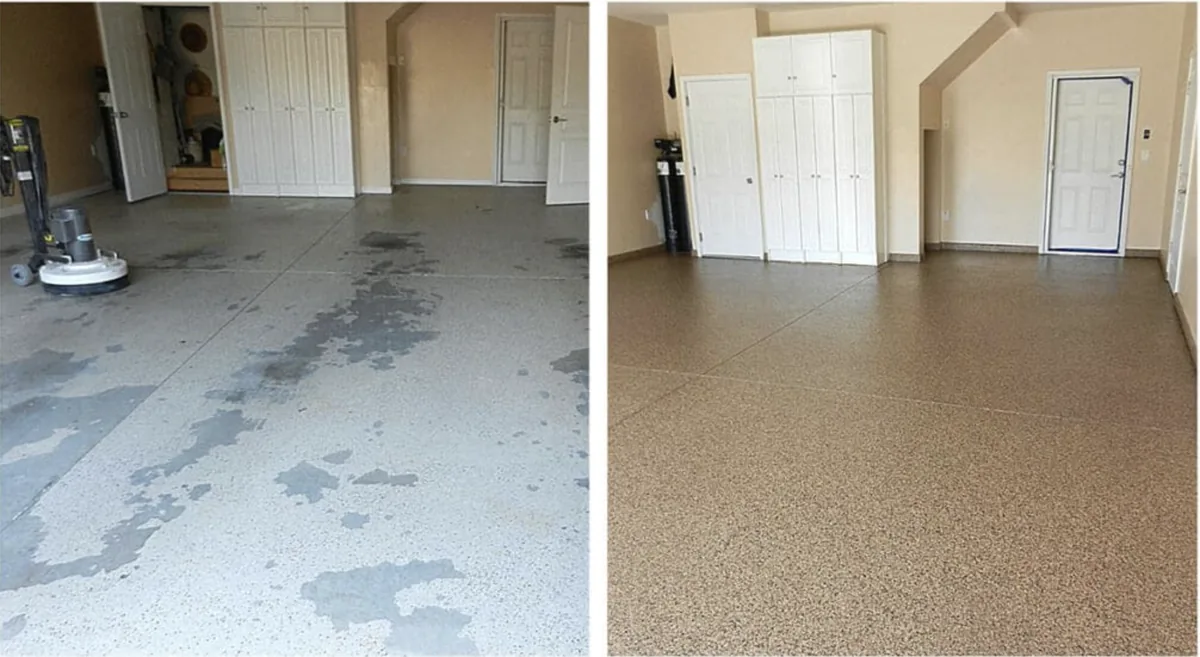
Once moisture is addressed, we diamond-grind the entire floor surface. The grinder removes the weak laitance layer and opens the concrete to create mechanical adhesion. We fill any cracks with a semi-rigid epoxy filler that flexes with the slab rather than cracking again. Control joints are left open or treated with backer rod and sealant depending on width and depth.

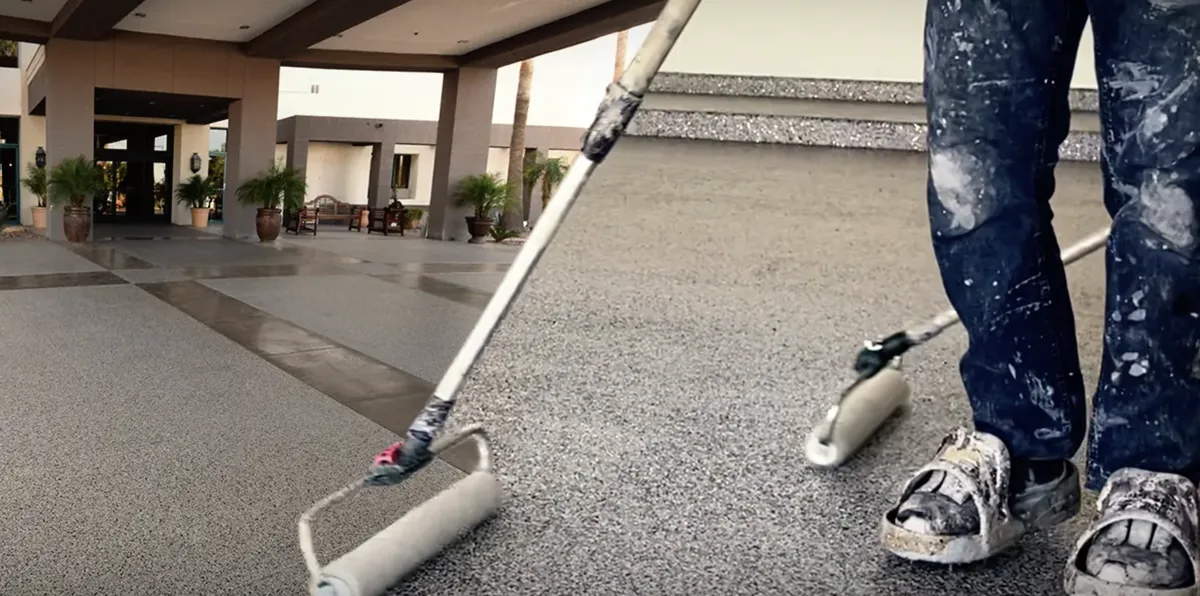
The primer coat goes down next, followed by the base color coat. If you’re getting a flake system, vinyl chips are broadcast by hand until the floor reaches the desired coverage level. After a cure window, the topcoat seals everything. Total installation time: 1–2 days. Return to vehicle parking: 7 days.

When Do You Need Garage Floor Epoxy?

Surface Pitting or Spalling

If the top of your concrete is starting to flake or pit, Indiana’s freeze-thaw cycle is doing what it always does to untreated garage floors. Epoxy stops the damage from progressing and seals the surface before it gets to the point of requiring slab repair.

Oil Stains That Won’t Clean

Motor oil soaks into bare concrete permanently. Epoxy creates a non-porous surface that doesn’t absorb spills. Any oil, brake fluid, or chemical that drips on a coated floor can be wiped up completely—no staining.

Home Gym or Workshop Conversion

Turning the garage into a workout space or hobby shop means you need a floor that’s clean, non-dusting, and comfortable to stand on. Epoxy with a full-flake topcoat gives you a surface that works for heavy equipment and foot traffic without gritty concrete dust underfoot.

Why Does Indiana Garage Concrete Deteriorate?

Concrete is porous by nature. In this part of Indiana, garage slabs face three compounding problems that accelerate wear faster than many other climates:

Freeze-thaw cycling. Water gets into the concrete’s pores, freezes, expands by about 9%, then thaws and contracts. This cycle happens 20–30 times per winter in central Indiana. Each cycle creates micro-fractures in the surface. Over years, those fractures widen into the pitting and scaling you see on older driveways and garage slabs.

Road salt. Hamilton County roads are heavily salted from November through March. Salt doesn’t just melt ice—it lowers the freezing point of water, which means the freeze-thaw cycle can happen at temperatures that bare concrete would normally survive. It also reacts chemically with the calcium hydroxide in concrete, weakening the surface over time. Every car that drives into your garage deposits salt residue on the floor.

Moisture vapor from below. Indiana’s soil holds water. Even in dry weather, moisture vapor moves up through a concrete slab. On a warm day when the garage door is open, you can sometimes see the floor darken as vapor condenses on the cool concrete. This moisture, combined with salt and temperature swings, is why uncoated garage floors age faster than they should.

Epoxy doesn’t make concrete indestructible, but it stops all three of these mechanisms at the surface. The sealed slab can’t absorb water, can’t absorb salt, and the chemical bond means the coating moves with the slab rather than fighting it.
What Affects the Cost of Garage Floor Epoxy in Carmel?

The installed cost for a garage floor epoxy job runs about $4 to $8 per square foot, depending on these factors:

System type. A solid-color single-layer epoxy is the most affordable. A full-flake system with primer, base coat, flake broadcast, and clear topcoat costs more in both materials and time. Polyaspartic systems use more expensive raw materials and command a higher price per square foot than standard epoxy.

Surface condition. A clean, flat slab with no prior coating and normal moisture levels is the baseline case. Every complication adds cost: existing coating removal ($1–$2/sq ft typically), significant crack filling, moisture mitigation primer, or floor leveling for severely uneven slabs.

Size and layout. Grinding and coating a straight rectangular 2-car garage is faster than working around columns, floor drains, embedded cables, or irregular angles. Floor drains and perimeter cove base are also add-ons that affect final cost.

Job TypeTypical Cost Range
1-car garage (200–250 sq ft), flake system$900–$1,600
2-car garage (400–500 sq ft), flake system$1,800–$3,200
3-car garage (600–750 sq ft), flake system$2,800–$4,800
2-car garage, polyaspartic system$2,400–$4,200
Crack repair add-on$150–$400 depending on severity

Full-Flake vs. Solid Color: Which Do You Need?

Full-flake epoxy is the most popular choice in Carmel for a reason. The multi-tone vinyl chips create a surface that disguises tire marks, dust, and light oil stains between cleanings. The texture also adds grip underfoot, which matters in Indiana winters when salt or snow gets tracked into the garage. Full-flake systems are also slightly more forgiving of minor surface imperfections in the base concrete, since the chip coverage masks small variations in the base coat.

Solid-color epoxy is the right choice when cleanliness of appearance is the priority—usually workshop spaces, show garages, or homeowners who want the floor to match a specific aesthetic. Solid floors photograph very cleanly, but they show scuffs, tire marks, and dust more readily than flake systems. They also require more frequent mopping to maintain the look.

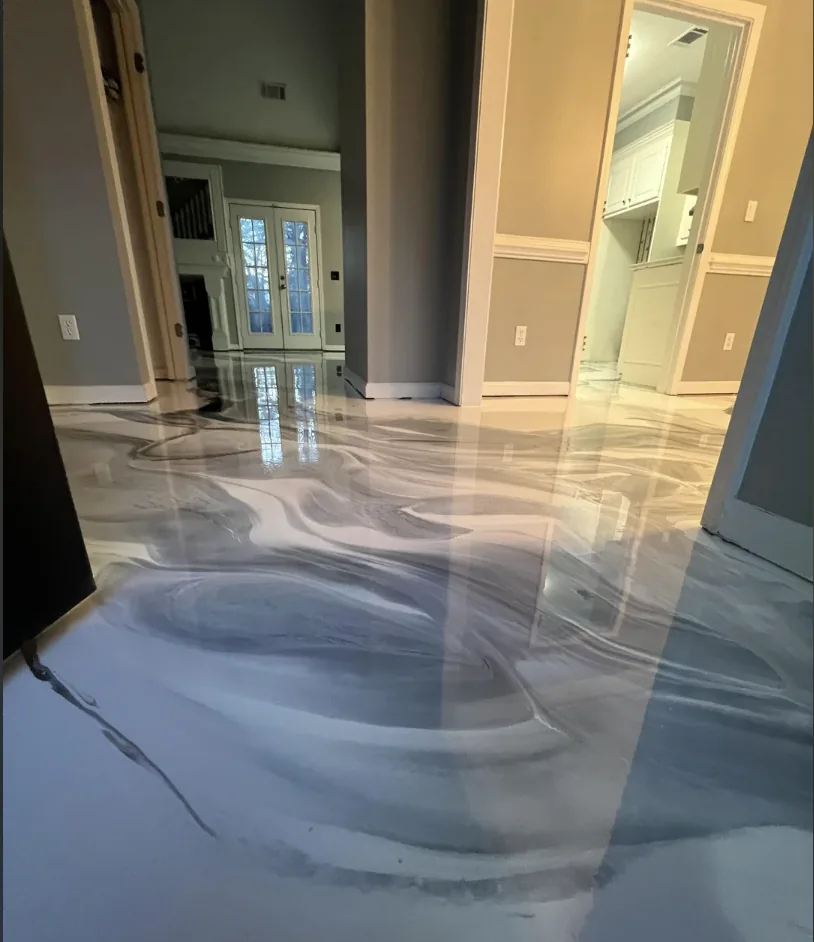
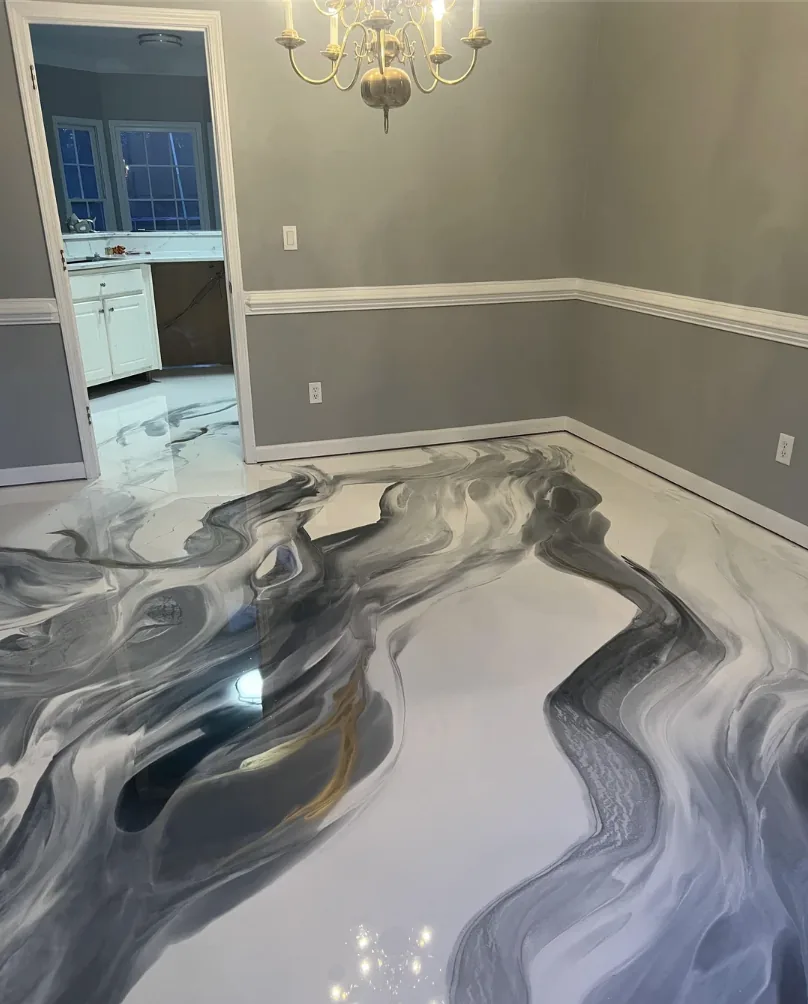
Metallic epoxy is a specialty option that uses metallic pigments in the base coat to create a marble or flowing liquid look. The finish is striking and unique, but the application is more complex, the cost is higher, and metallic floors are more prone to showing fine surface scratches over time. Best suited to display spaces and clients who are committed to maintaining the floor carefully.

If you’re parking daily-driver cars, we almost always recommend full-flake. If you have specific aesthetic goals, call us and we’ll talk through the trade-offs with your actual garage in mind.

Frequently Asked Questions

Ready for a New Garage Floor in Carmel?

Free on-site estimates throughout Hamilton County. Most jobs scheduled within 2 weeks of approval.

Call (317) 493-0591 Request a Quote Online